The village bank in Alaska closed when I was fourteen. Not permanently—just for three days while they “updated their systems.” Three days where nobody could access their own money. Three days where the fishing fleet couldn’t buy fuel, the store couldn’t order supplies, and families couldn’t pay bills.
The bank apologized for the “inconvenience.” But here’s what stuck with me: it wasn’t their money. It was ours. Yet somehow, they got to decide when we could use it.
That’s the central problem Bitcoin solves, and it’s not the one most people talk about.
The Permission Problem
Every monetary system before Bitcoin required someone’s permission. Kings decided what counted as money. Central banks decided how much to print. Commercial banks decided when you could access it. Payment processors decided which transactions to allow.
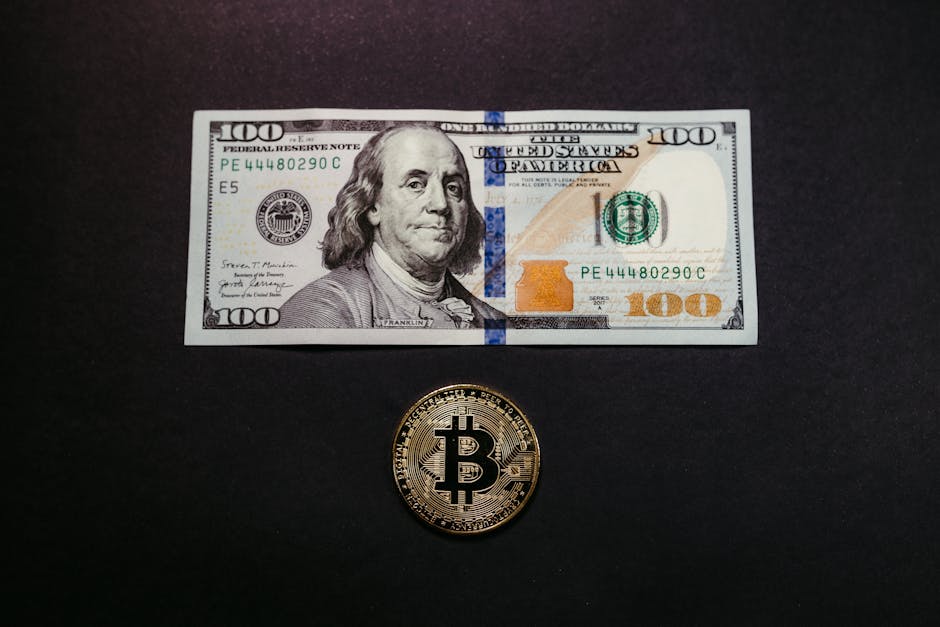
Even gold—the closest thing to “real” money we’ve had—required permission systems around it. Try carrying $100,000 in gold across a border. Try storing it without a vault. Try spending it without someone weighing it, testing it, and deciding whether to accept it.
Bitcoin is the first money that works without anyone’s permission. No central authority to shut down. No single point of failure. No CEO to arrest or building to raid.
“Bitcoin is the separation of money and state.” —Eric Voorhees
That’s not hyperbole. For the first time in human history, we have money that exists independently of political systems.
Beyond the Price Circus
Most Bitcoin coverage focuses on price. Will it hit $100K? $1M? Who cares? That’s missing the point entirely.

The revolutionary aspect isn’t Bitcoin’s price—it’s Bitcoin’s properties. It’s programmable money that works the same way whether you’re sending $5 or $5 million. Whether you’re in Manhattan or Mogadishu. Whether your government likes you or not.
Consider what this means practically:
- No banking hours. The Bitcoin network doesn’t close for holidays or “maintenance.”
- No geographic restrictions. Value moves as easily as information.
- No minimum balances or monthly fees. The network doesn’t care how much you have.
- No permission required. Your keys, your coins. Period.
The Infrastructure of Freedom
Here’s what most people miss: Bitcoin isn’t just money. It’s infrastructure. Like roads, electricity, or the internet, it’s a foundational system that enables other things to be built on top.
That infrastructure has unique properties:
Censorship Resistance: No one can stop a valid transaction. Not governments, not corporations, not angry mobs on Twitter.
Global Settlement: Final settlement happens every ten minutes, not every few business days. No “funds on hold” or “processing delays.”
Transparent Verification: Every transaction is recorded on a public ledger. You can verify the entire monetary base with a laptop.
Fixed Supply: 21 million coins. No exceptions, no printing press, no “quantitative easing.” The monetary policy is written in code, not committee meetings.
The Network Effect of Sovereignty
Every person who holds their own Bitcoin keys increases the network’s sovereignty—and their own. It’s not just about portfolio allocation. It’s about opting out of systems that require your permission to use your own money.
This creates a feedback loop. The more people hold Bitcoin directly (not through custodians like exchanges or ETFs), the stronger the network becomes. The stronger the network becomes, the more viable it is as an alternative to permission-based money.
We’re not just watching an investment vehicle. We’re watching the bootstrap of a parallel financial system.
“Bitcoin is a tool for freeing humanity from oligarchs and tyrants, dressed up as a get-rich-quick scheme to attract the masses.” —Naval Ravikant
The Real Test
Bitcoin’s ultimate test isn’t whether it makes early adopters wealthy. It’s whether it remains permission-less when powerful interests want to control it.
That test is happening right now in 2026. Governments are trying to regulate it. Corporations are trying to co-opt it. Traditional finance is trying to capture it through ETFs and custodial services.
The question isn’t whether Bitcoin will survive these attempts at control—the protocol is antifragile by design. The question is whether individual users will maintain their sovereignty within the system, or whether they’ll trade it away for convenience.
If you’re holding Bitcoin through a custodian, you’re missing the point. You’re recreating the same permission-based system Bitcoin was designed to replace. You’re back to asking someone else if you can access your own money.
The real revolution happens when you hold your own keys. When you run your own node. When you participate directly in a monetary system that doesn’t require anyone’s permission.
That village bank in Alaska taught me something important: when someone else controls the system, you’re always at their mercy. Bitcoin changes that equation fundamentally.
The question is: are you ready to be your own bank? Or are you more comfortable asking permission?
 Scrivener.PRO