Picture this: You’re seventeen years old, standing on the deck of a fishing boat at 4 AM, waves crashing over the bow, and your captain is screaming something about net tension over the engine noise. You have exactly three seconds to decide whether to release the winch or risk losing $50,000 worth of equipment.
Nobody asks to see your GPA. There’s no multiple choice. The ocean doesn’t grade on a curve.
This is education.
The Difference Between Schooling and Learning
School taught me that learning happens in neat 50-minute blocks, with bells to tell you when to start thinking and when to stop. The real world taught me that problems don’t wait for permission slips.
In twelve years of formal education, I memorized dates, formulas, and the correct answers to questions other people thought were important. I learned to regurgitate information on command, optimize for test scores, and navigate bureaucratic systems designed more for crowd control than knowledge transfer.

But here’s what school never taught me: how to troubleshoot a hydraulic system at sea, how to read weather patterns that could kill you, or how to make split-second decisions when lives and livelihoods hang in the balance.
Real education happens when the stakes are real and the feedback is immediate.
Where Real Learning Lives
The most valuable lessons I’ve learned came from places where failure had consequences beyond a letter grade.
On construction sites, I learned that measure twice, cut once isn’t just about lumber—it’s about thinking systems through before you act. In sales, I discovered that people buy trust, not features, and that understanding human psychology matters more than memorizing product specifications.
In server rooms at 2 AM, debugging crashed systems while customers scream, I learned more about problem-solving than any computer science course could have taught. When your fix either works or costs the company millions, you develop a different relationship with knowledge.

The Credentialing Theater
Don’t get me wrong—I’m not anti-education. I’m anti-credentialing theater.
There’s a massive difference between acquiring knowledge and collecting certificates. One makes you more capable; the other makes you more employable. Sometimes you need both, but let’s not pretend they’re the same thing.
I’ve worked with people who had computer science degrees from prestigious universities who couldn’t troubleshoot their way out of a paper bag. I’ve also worked with self-taught developers who could architect solutions that left the credentialed crowd scratching their heads.
The diploma on your wall doesn’t write the code. You do.
Here’s the uncomfortable truth: most formal education is optimized for institutional needs, not individual growth. Schools need standardized metrics. Employers need screening mechanisms. Students need checkboxes to advance to the next level.
But actual competence? That’s messier. It can’t be standardized, it can’t be mass-produced, and it definitely can’t be measured by a Scantron sheet.
Building Your Real Education
So how do you get an actual education in 2026, whether you’re in school or not?
First, find problems that matter to you and solve them. Not practice problems from textbooks, but real challenges that exist in the world. Build something. Fix something. Improve something.
Second, seek out feedback loops that sting. If your mistakes don’t cost you anything—time, money, reputation, or pride—you’re not learning fast enough. Find environments where failure teaches.
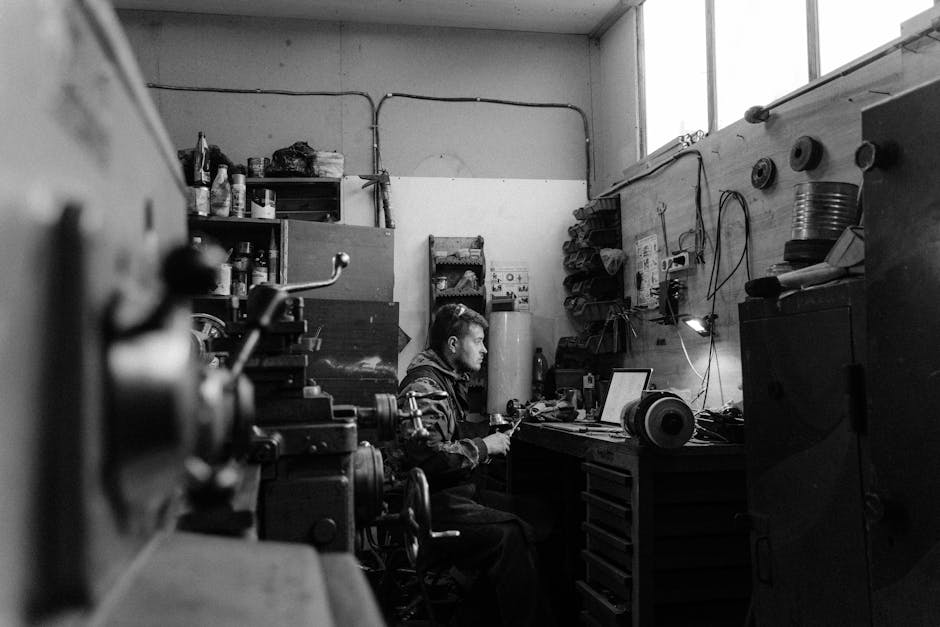
Third, learn from practitioners, not just teachers. The person who’s been debugging network issues for fifteen years knows things that no textbook covers. The entrepreneur who’s failed twice and succeeded once has insights that business school can’t provide.
Fourth, develop the skill of learning itself. Most of what you’ll need to know five years from now doesn’t exist yet. The ability to rapidly acquire new knowledge, test it under pressure, and integrate it with what you already know—that’s the meta-skill that matters.
The Questions School Never Asked
Real education isn’t about having the right answers—it’s about asking better questions.
School asked: “What’s the capital of Montana?”
Life asks: “How do you build systems that don’t break when Montana gets hit by a cyberattack?”
School asked: “What did Shakespeare mean in Act III?”
Life asks: “How do you communicate complex technical concepts to people who think the cloud is made of water vapor?”
The difference isn’t subtle. One approach fills your head with other people’s conclusions. The other teaches you to think.
Look, I’m not telling you to skip school if that’s your path. Get the credentials if you need them to open doors. Play the game if that’s what it takes.
But don’t confuse the game with the goal. Don’t mistake the diploma for the education. And definitely don’t stop learning once you leave the classroom.
The real question isn’t whether you went to school. It’s whether you can solve problems that matter, adapt when the rules change, and keep growing when nobody’s there to tell you what to study next.
That’s an education worth having. Whether you got it in a classroom or on the deck of a fishing boat is just details.
 Scrivener.PRO