The warehouse floor at 3 AM tells you everything you need to know about AI tools. No marketing fluff. No demo environments. Just whether the system keeps the lights on when things break.
I’ve watched companies blow six figures on AI consultants who promised to “transform their business” with chatbots that couldn’t handle basic customer questions. Meanwhile, the same companies ignore the AI tools already saving them hours every day.
Here’s what actually works when the demo ends and real work begins.
The Quiet Revolution: Industrial AI That Ships Products
While Silicon Valley debates consciousness, companies like Hitachi are solving real problems. Physical AI—the unglamorous cousin of chatbots—is running factories, managing supply chains, and keeping industrial machinery from exploding.
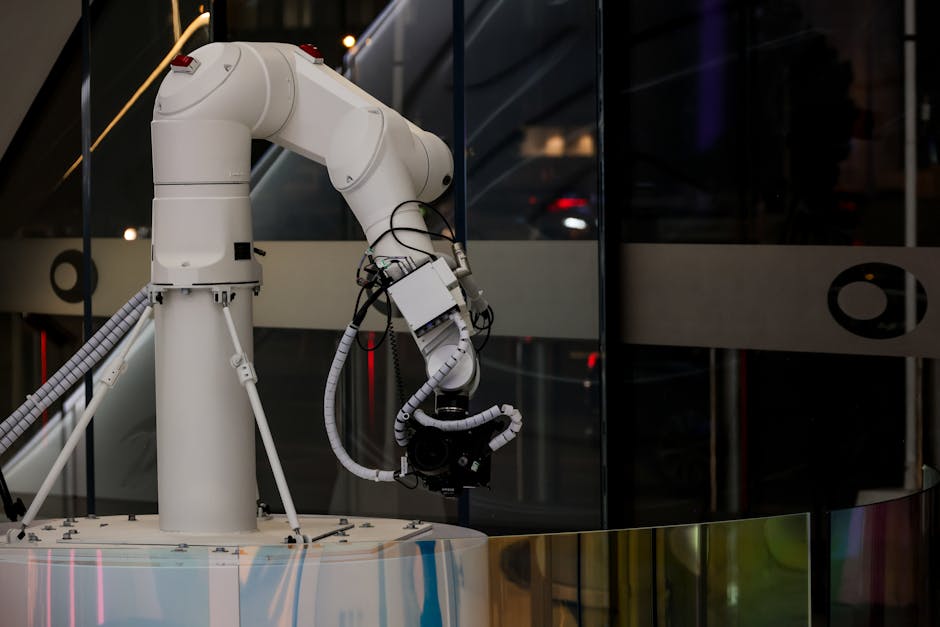
These aren’t the AI tools making headlines. They’re the ones making money. Predictive maintenance systems that catch bearing failures before they shut down production lines. Inventory optimization algorithms that know which parts to order before you run out.
“Physical AI has moved beyond proof-of-concept. It’s in the trenches, making manufacturing 15-20% more efficient without the fanfare.”
The pattern here matters: the best AI tools solve specific, measurable problems. They don’t promise to “revolutionize everything.” They promise to reduce downtime by 30%. Different conversation entirely.
Content Creation: Where AI Actually Delivers
Content creation is where AI tools have hit their stride. Not because they’re “creative,” but because they understand patterns in text and images better than any system we’ve had before.
Tools that actually work:
- GPT-4 and Claude for research and drafting: They’re research assistants, not writers. Feed them raw information, get structured analysis back. Use them to fight blank page syndrome, not to replace your voice.
- Midjourney and DALL-E for visual concepts: Perfect for rapid prototyping ideas. Terrible for final production work without human refinement.
- Jasper and Copy.ai for marketing copy: They understand conversion frameworks better than most marketers. Feed them your brand voice, get variations to test.
The mistake most people make is asking AI to be creative. Ask it to be systematic instead. “Write me a blog post” gets garbage. “Analyze these customer reviews and identify the top 5 pain points” gets gold.
Data Analysis: Finally, Spreadsheets That Think
Enterprise treasury management used to mean armies of analysts building Excel models that broke when you looked at them wrong. AI is changing that game completely.
Modern AI tools can ingest data from dozens of sources, spot patterns humans miss, and actually explain their reasoning. They’re not just calculating faster—they’re seeing connections we couldn’t.

What’s working in 2026:
- Automated data pipelines: Tools like Zapier Intelligence and Microsoft Power Automate are connecting systems that never talked before.
- Predictive analytics platforms: Companies like DataRobot and H2O.ai make machine learning accessible to people who don’t code in Python.
- Natural language query tools: Ask questions in plain English, get SQL queries and visualizations back. No more waiting for the data team.
The real value isn’t the automation—it’s the speed of iteration. You can test hypotheses in minutes instead of weeks. That changes how you think about problems.
Customer Service: Beyond the Chatbot Graveyard
Most customer service AI is theater. Chatbots that transfer you to humans after three failed attempts. Voice systems that make you repeat yourself until you’re shouting at robots.
But when AI customer service works, it’s transformative. The key is knowing what AI handles well (information retrieval, pattern matching, basic transactions) and what it doesn’t (complex problem-solving, empathy, edge cases).
“The best AI customer service feels like talking to your most competent employee—the one who knows everything and never has a bad day.”
Success patterns:
- Hybrid systems: AI handles the routine, humans handle the complex. Clean handoffs, no friction.
- Context awareness: The system knows your history, preferences, and current situation before you explain it again.
- Proactive problem-solving: Reaching out when your system detects issues, not waiting for complaints.
Coca-Cola’s recent shift toward AI-driven marketing shows this principle at scale. Instead of replacing human creativity, they’re using AI to understand what resonates with different audiences, then letting humans craft the message.
The Real Test: Does It Work When Nobody’s Watching?
Here’s the thing about AI tools that actually work—they disappear into your workflow. You stop thinking about them as “AI” and start thinking about them as “Tuesday.”
The warehouse system that prevents stockouts doesn’t announce itself. The writing assistant that helps you structure your thoughts becomes invisible. The data analysis tool that spots the anomaly at 2 AM just sends a quiet alert.
The APAC retail sector gets this. They’re not chasing the flashy stuff. They’re using AI to handle inventory in dense urban stores, reduce labor churn, and compete in quick-commerce markets where speed is survival.
That’s not sexy. It’s profitable.
The best AI tools solve problems you didn’t know you had, in ways you didn’t expect, for businesses that care more about results than press releases. They work at 3 AM when the demo team has gone home and the real world is still spinning.
Question is: are you ready to stop talking about AI transformation and start using the tools that actually transform work?
 Scrivener.PRO