
Picture a kid on a fishing boat at 4 AM, sorting halibut in the dark while the ocean tries to kill him. Nobody handed him a rubric. Nobody told him the learning objective. Either he figured out how to coil the line correctly or he went overboard. That’s not school. That’s education.
Now picture that same kid, fifteen years later, sitting in a college classroom being tested on whether he can memorize the correct sequence of events in a war that ended before his grandfather was born. Multiple choice. Forty-five minutes. Pencils down.
One of those experiences will stick with him for the rest of his life. The other one he’ll forget by Thursday.
What School Was Actually Designed to Do
Here’s the thing about modern compulsory schooling—it wasn’t designed by accident. John Taylor Gatto spent thirty years as a New York City schoolteacher, won Teacher of the Year, and then spent the rest of his life explaining that the system was working exactly as intended. Just not for you.
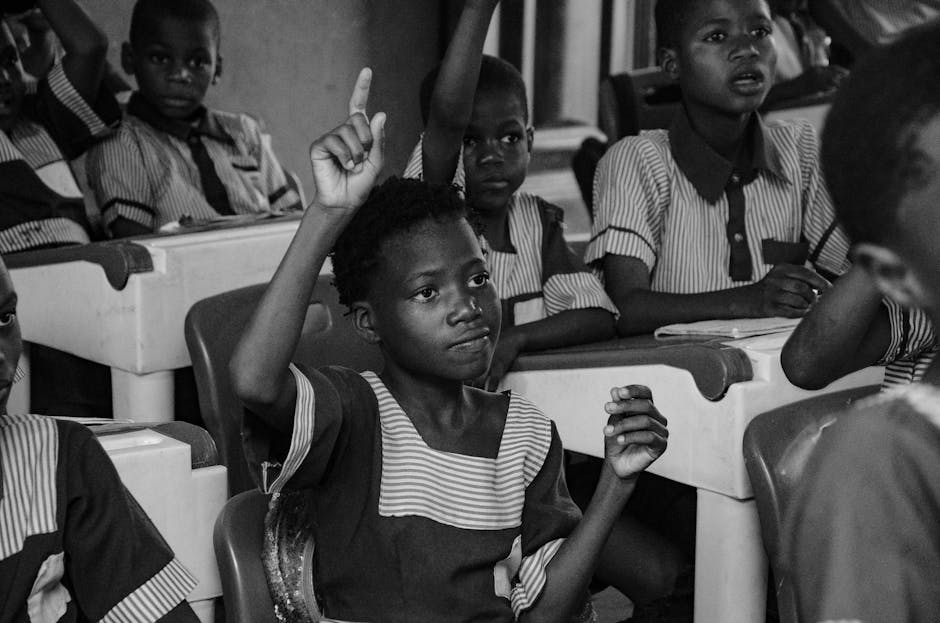
The Prussian model of mass education—imported to America in the 1800s—was engineered to produce obedient industrial workers and compliant soldiers. Sit still. Follow instructions. Don’t ask why. Ring the bell, change subjects. Another bell, stand up, go to the next room.
“School is a twelve-year jail sentence where bad habits are the curriculum.” — John Taylor Gatto, Dumbing Us Down
That’s not a conspiracy theory. That’s documented history. The question isn’t whether school does this—it’s whether you’re going to let it be the last word on your education.
The system grades you on compliance, not comprehension. It rewards students who can hold still and repeat back what they were told. The kids who ask too many questions get diagnosed. The ones who learn differently get left behind. And the ones who are genuinely curious? They learn to hide it by middle school, because curiosity is a liability in a system built for standardization.
What Real Education Actually Looks Like
Real education is what happens when you have a problem that costs you something if you get it wrong.
It’s debugging a production server at 2 AM when the entire site is down and you’ve never seen this error before. It’s reading Rothbard because you wanted to understand why your paycheck keeps shrinking. It’s watching a Louis Rossmann video about right-to-repair because your laptop died and you wanted to know if the manufacturer was lying to you. Spoiler: they were.

Real education has skin in the game. School has grades.
The difference isn’t just philosophical—it’s neurological. Your brain encodes information differently when there are real consequences attached. Fear, excitement, genuine curiosity—these are the chemicals that make knowledge stick. Rote memorization for a test that you’ll forget about in seventy-two hours? That’s not learning. That’s short-term data storage on a drive you’re about to wipe.
Austrian economists have a concept called praxeology—the study of human action, of people making real decisions under real constraints. You can’t learn praxeology in a vacuum. You learn it by watching how people actually behave when something is on the line. School teaches you theory stripped of consequence. Real education teaches you what happens when the theory meets reality.
The Credential Trap and How to Navigate It
Look, I’m not going to tell you credentials don’t matter. They open doors. Especially early in a career, before you have a track record that speaks for itself. Get the certifications that are worth having—the ones that translate directly to skills employers can verify. Get them strategically, not religiously.
But here’s where the trap is: most people mistake the credential for the education. They get the certificate and stop learning. They paid for the stamp and figured that was the work.
“The function of a diploma is to say: this person can follow instructions and survive bureaucratic processes. It says almost nothing about whether they can solve a problem you’ve never seen before.”
The people who actually build things—the ones who end up solving the hard problems—they’re the ones who kept learning after the test was over. They read books nobody assigned. They broke things in their home labs. They joined communities where real work was being done and they contributed, even badly at first, because failing in a real context teaches more than succeeding in a simulated one.
In 2026, this has never been more true. Every tool, every framework, every concept you need to build something real is available for free or close to it. MIT OpenCourseWare. The Mises Institute putting out lectures on Austrian economics. Library Genesis for books your university would charge you three hundred dollars to access. YouTube channels run by people who actually do the work and explain it like a friend, not a professor protecting their tenure.
Building Your Own Curriculum
The beautiful and terrifying thing about self-education is that nobody hands you the syllabus. You have to figure out what’s worth learning, in what order, and how to know when you actually know it.
Start with problems, not subjects. Don’t decide you’re going to “learn economics” in the abstract. Decide you want to understand why your rent keeps going up even though you were told inflation was under control. That’s a real problem. Start there. Follow the thread wherever it leads.

The thread will lead you somewhere school never would have taken you. You’ll end up reading Rothbard and Hayek and then you’ll read their critics and then you’ll have an actual opinion about monetary policy—not a memorized answer, but a position you can defend because you built it yourself from first principles.
That’s the difference. School gives you answers. Education teaches you how to build them.
Some practical starting points if you want to build a real curriculum in 2026:
- Critical thinking: Start with Gatto’s Dumbing Us Down to understand what you’re working against, then move to Feynman’s lectures on physics—not for the physics, but for the model of how a curious mind operates.
- Economics: Henry Hazlitt’s Economics in One Lesson is still the best single entry point. Read it in a weekend. Then watch George Gammon on YouTube to see how the concepts play out in real markets right now.
- Technology: Pick one thing you want to build and build it badly. Then build it again. The documentation is the textbook. Stack Overflow is the study group. The broken code is the exam.
- Philosophy: Start with questions you already have. If you’re angry at an institution, read Larken Rose. If you want to understand how power structures form, read Herbert’s Dune as political philosophy, not fiction.
The Real Question
Here’s where I’m going to leave you, because you’re an adult and you can figure out the rest yourself.
Every system you participate in is designed by someone, for some purpose. School was designed to produce a certain kind of person. Before you decide whether to play along, the rational thing to do is ask: what kind of person does this system want to produce? Is that who you want to be?
Same rules for everyone means this: the kid who grew up in a village of seventy-eight people with no library and dial-up internet should have the same access to real knowledge as the kid whose parents sent him to prep school. In 2026, for the first time in human history, that access actually exists. The information is there. The question is whether you want it badly enough to go get it yourself—or whether you’re going to keep waiting for someone to design a curriculum and grade you on it.
Because nobody’s coming to hand you the education. They were never going to. That was always your job.
So—what’s the most important thing you’ve taught yourself that school never would have gotten around to?
 Scrivener.PRO
Leave a comment